Notes avatar

Reading

Stuff from (or about) the books, articles, blog posts, pdf files, & all the other sundry texts I read.

More boredom please

From a post on Michael Easter’s 2% Substack.

We all know we spend too much time on our phones. There are thousands of articles offering tips on how to use your phone less. But these often miss an important point. When people reduce their phone screen time, they often get bored—and immediately replace it with another screen, short-circuiting the very mental state that drives creativity. Taking a couple of hours off your phone screen time only to add in more TV time is like replacing cigarettes with chewing tobacco.

Yeah!


Easter’s larger point is that, rather than telling ourselves we need to look at our phones less, we should try to increase the time we spend not being stimulated by a screen.

“Instead of less phone, more boredom,” he said in a different podcast/interview.

It’s a simple and obvious observation. One that is so simple and so obvious that people (myself included) don’t think it.
Watchful negligence

I read this in a New Yorker profile of Tim Berners-Lee, the man who is credited with inventing the word wide web: [Tim’s mother] Mary, a believer in “watchful negligence,” would let him and his three younger siblings wrap themselves in extra perforated tape.

I now really like the term “watchful negligence”!

I also really like how the author of the profile put that term in quotation marks. A great small editorial choice.


P.S. This is a post from one of my old blogs that I’m moving over to From78.

Living in the Jackpot

Via Manton Reece (@manton)

Moltbook — a social network for AI agents to have discussions with one another. This is wild. I often joke about “our future AI overlords” but this might’ve just crossed a line into actual concern… We are putting a lot of trust into these new bots. 🦞

OMG!

My immediate first ass association is to the concept of “the jackpot” from the recent William Gibson novels.

For those who may not be familiar with the “jackpot” as a term/concept:

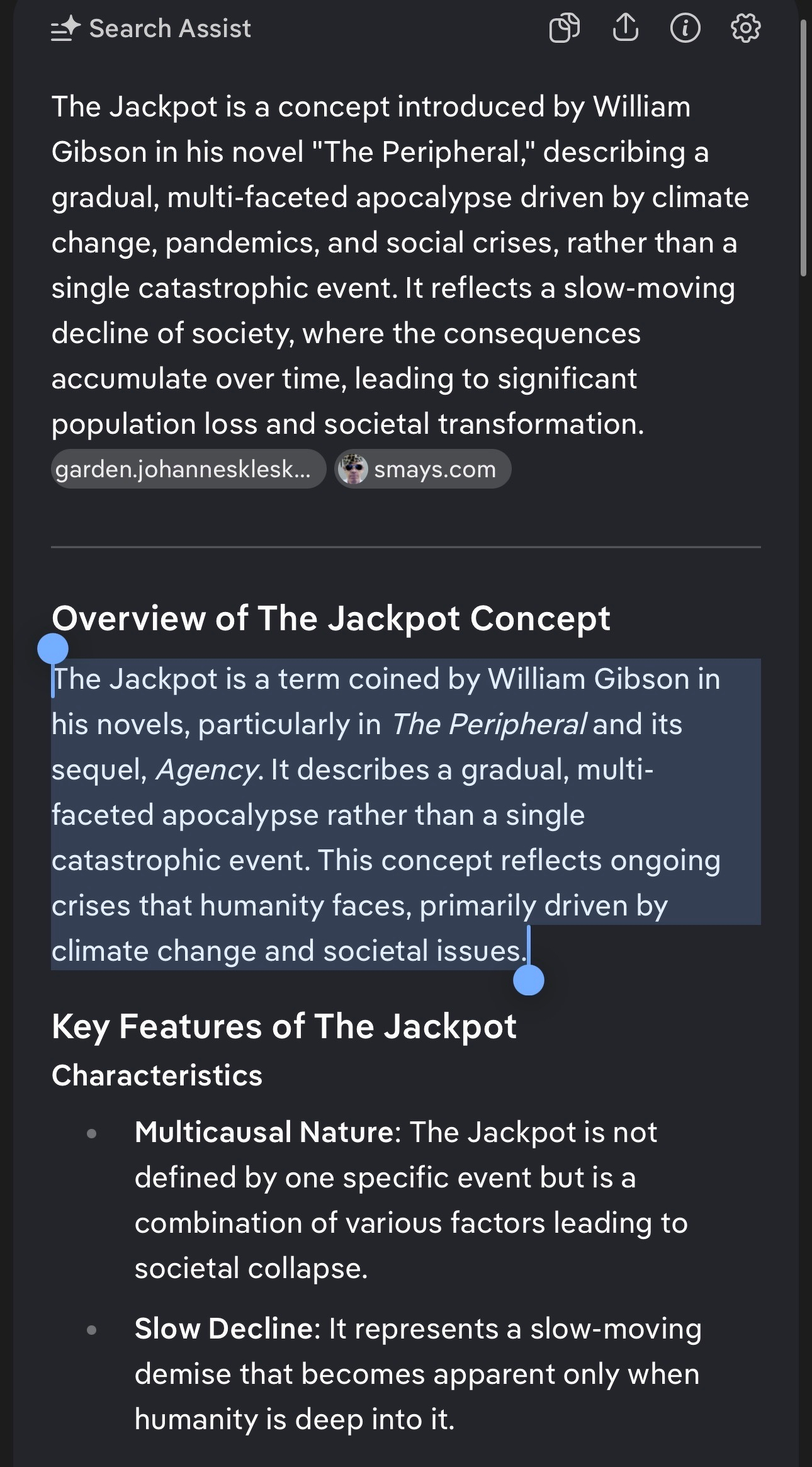
The Jackpot is a term coined by William Gibson in his novels, particularly in The Peripheral and its sequel, Agency. It describes a gradual, multi-faceted apocalypse rather than a single catastrophic event. This concept reflects ongoing crises that humanity faces, primarily driven by climate change and societal issues.

Ironically, the quoted text above came from the AI generated summery when I searched for the term via DuckDuckGo.

Lacan’s system.

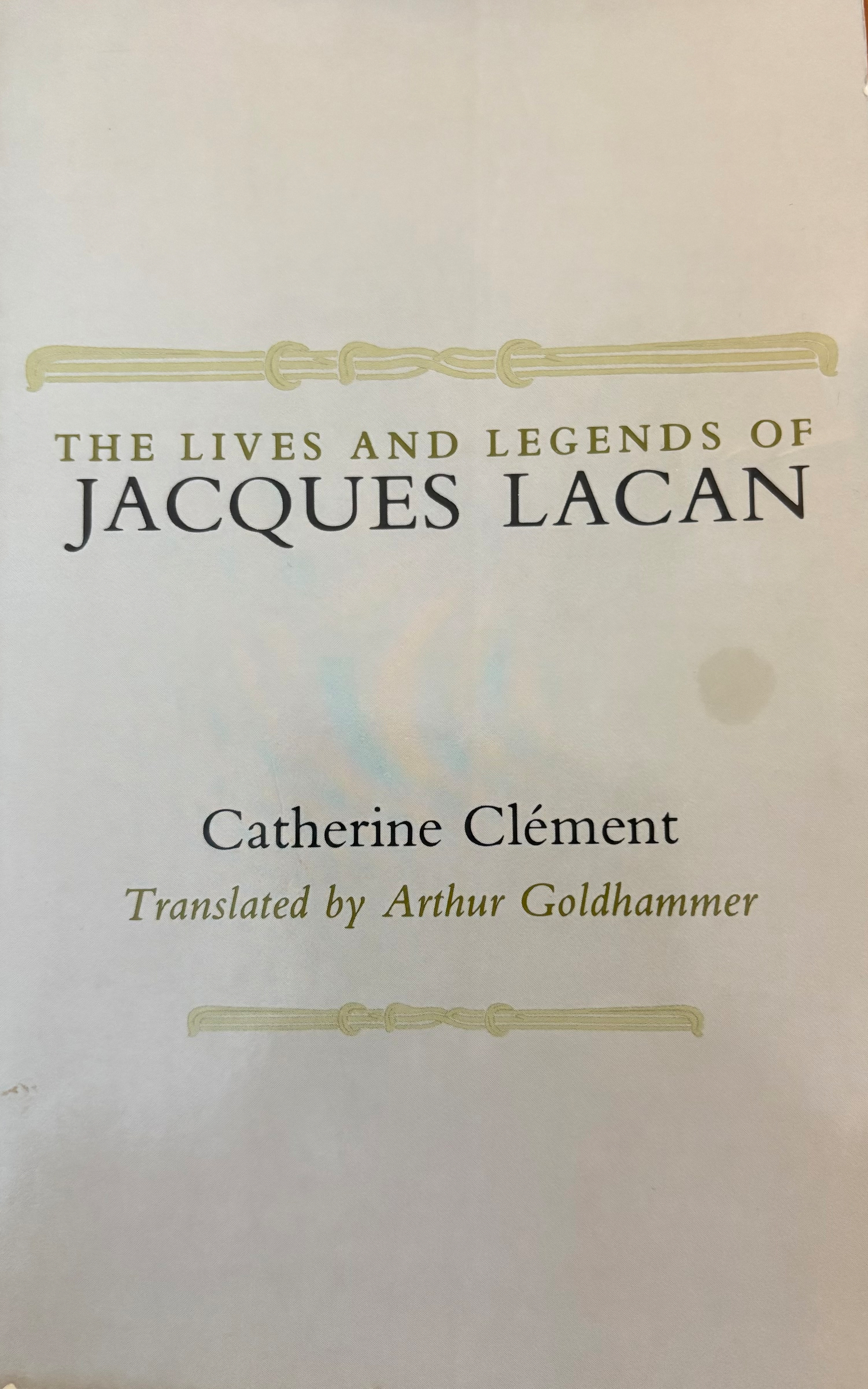
From The Lives and Legends of Jacques Lacan, by Catherine Clément

About love nobody ever spoke better than Lacan […] Love was a permanent presence, ever so lightly touched upon as he - lingered lazily, lengthily over the dead ends of desire, the desperations of fantasy, and the impossibility of “sexual intercourse.” In Lacan’s system, which is less inflexible and less fully worked out than some people think, love will no doubt remain one of the few escapes, perhaps the only one. Love was a door which, unlike the others, was not closed. A door left ajar. (p. 21)

There are several interesting things in this.

  1. Lacan’s system is less inflexible and not fully worked out.
  2. The importance of love as an act, as a creative act within Lacan’s thought.

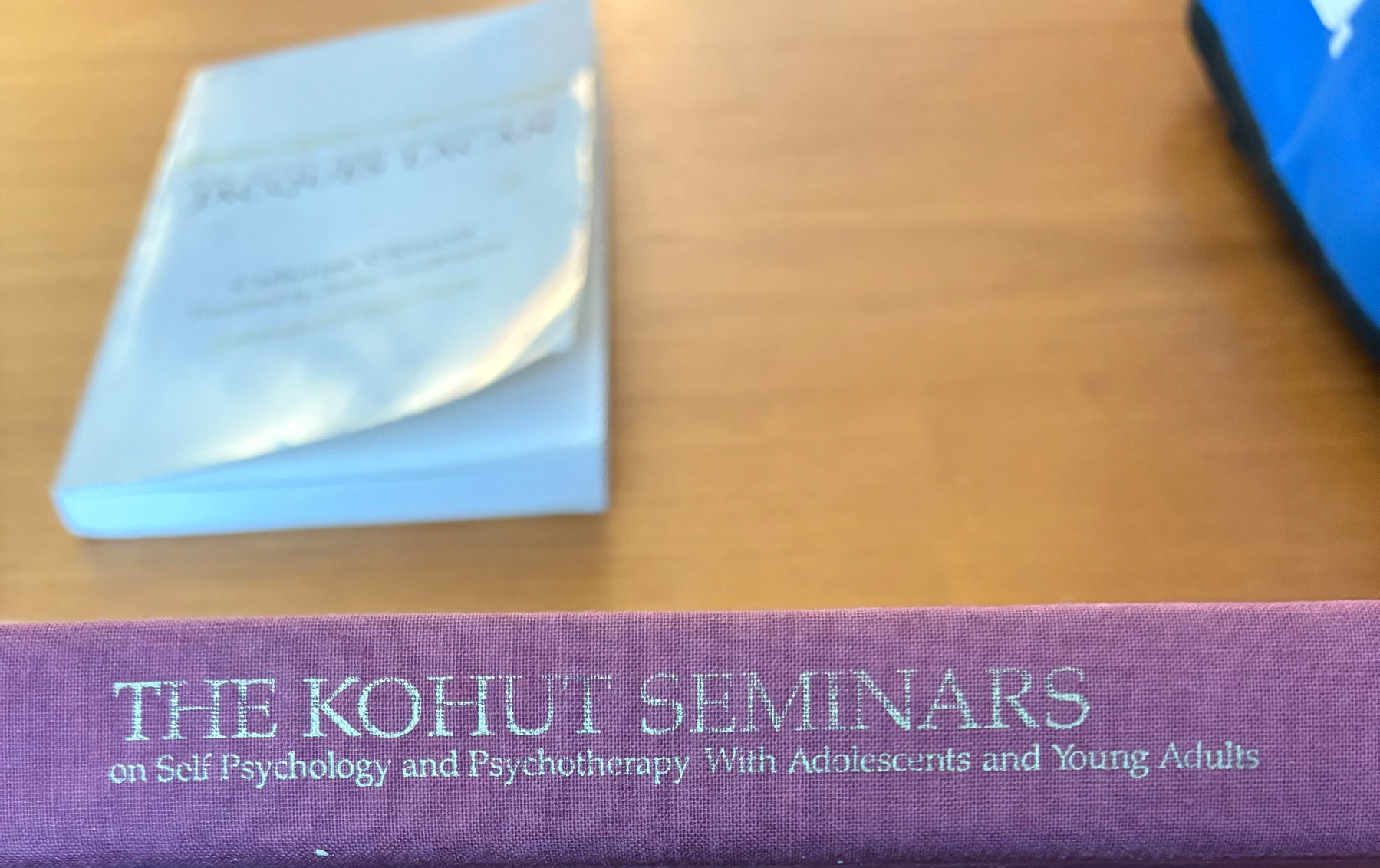
From The Kohut Seminar: On Sslf Psychology and Psychotherapy with Adolescents and Yoong Adults.

Coleridge spoke of “the willing suspension of disbelief,” there is also a necessity for the willing suspension of disbelief when you listen to a particular mode in which a topic is presented to you. I do not suggest the willing suspension of disbelief forever; I suggest only a suspension of disbelief until you have grasped what the other person has to offer. In other words, one does not object before one has first heard the other person out to some extent. (p. 4)

Yeah. Very well said .

George Saunders: On Admitting to something

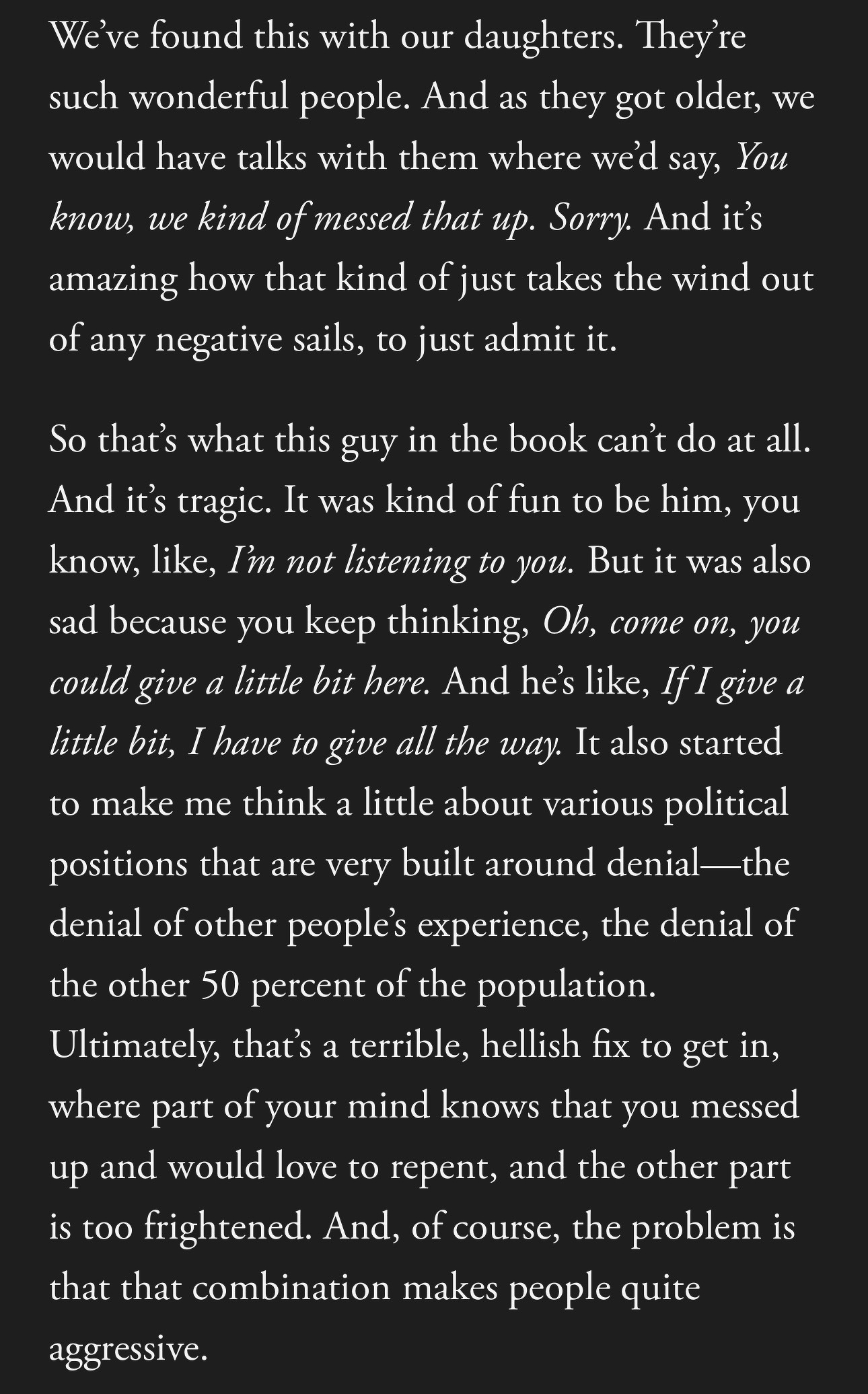
From an interview with George Saunders in The Atlantic, where Saunders is talking about admitting to what we have gotten wrong, as opposed to avoiding it in all the ways we can avoid owning up to what we have done or failed to do.

And as they got older, we would have talks with [our kids] where we’d say, You know, we kind of messed that up. Sorry. And it’s amazing how that kind of just takes the wind out of any negative sails, to just admit it.

Yeah.

An association: This reminds me of one of the many 12 step sayings, “You’re only as sick as your secrets.”

If keep something I’ve really messed up a secret, it can really mess with me a lot… it takes effort to keep something a secret. Admitting to what I’ve done wrong, or poorly, or failed to do, is not fun, but it takes less energy than keeping something a secret.

A good sentence

From the book Winnicott: Life and Work by Robert Rodman (Amazon)

Her beliefs in the supernatural, evidenced by the notion that Lawrence of Arabia was communicating with her through a parrot, further suggest that at the very least, she was not accustomed to the rigors of scientific thought. (p. 53)

What a great sentence that is.